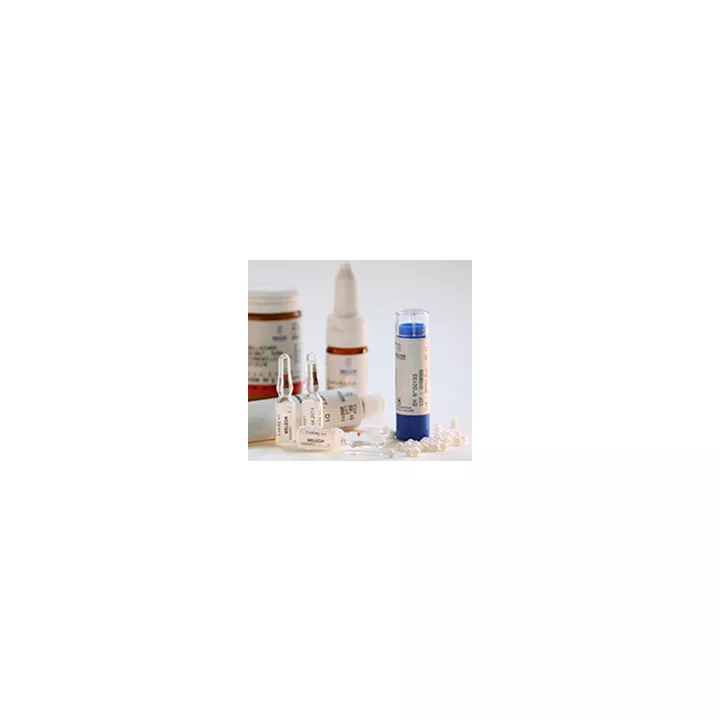
BRYONIA D6 D10 Granule Tube HOMEOPATHY Weleda
French Name: BRYONE
Registered Medication: EH00050
Listed in the Pharmacopoeia
. Origin: Plant-based
If there is no improvement within 24 hours, consult your homeopathic physician.
Bryonia in Homeopathy: Uses, Benefits, and Optimal Dosage
Bryonia Alba: The source of this remarkable homeopathic substance is the root of the white bryony (Bryonia alba), an extremely toxic perennial climbing plant native to Europe and North Africa. However, thanks to its homeopathic processing, Bryonia has proven to be a beneficial remedy for a wide range of ailments.
Profile of Bryonia Alba in Homeopathy
Painful spots, inflammation, dryness.
Key Words: Worsening of symptoms with movement; relief of pain through pressure and complete rest; intense thirst.
Indications and Dosage
Weleda homeopathic remedies—whether in granule tubes or globule doses—can be used for various symptoms; therefore, it is not possible to specify the indications and dosage for a specific preparation.
The homeopathic physician selects the appropriate remedy, dilution, and dosage based on the patient’s condition and characteristic symptoms.
Uses of Bryonia Alba
Bryonia Alba in Infectious Diseases
-
Acute Conditions: Bryonia Alba is effective for treating acute conditions, typically characterized by a high fever that develops gradually. The patient prefers solitude and complete immobility. Their condition improves with rest and firm pressure. Sweating provides relief. The patient has an intense thirst for large quantities of cold water.
-
Headaches, frontal pain: These pains often accompany acute conditions. They are aggravated by head movements and relieved by pressure. Highly effective for frontal sinusitis.
-
Cough: It is dry and painful; the patient refrains from coughing and taking deep breaths. The cough is a common symptom of rhinitis, bronchitis, and pneumonia. It is soothed by firm pressure on the chest.
-
Common cold and dry sinusitis: Bryonia Alba is ideal for treating the common cold with a dry nose, dry sinusitis, and dryness of the respiratory tract, which causes the type of cough mentioned above.
Bryonia Alba in Gastroenterology
- Constipation: Bryonia Alba helps relieve constipation characterized by large, hard, and dry stools.
Bryonia Alba in Rheumatology
- Joint pain, osteoarthritis, joint inflammation: This homeopathic remedy is effective for joint pain, osteoarthritis, and joint inflammation, especially when the large joints are affected; the pain is worsened by movement, touch, and local cold, and is relieved by rest, pressure, and local heat.
Bryonia Alba in gynecology
- Breast pain: Breast pain is relieved by wearing a tight-fitting bra.
Other Uses of Bryonia Alba
-
Neuralgias, stiff neck, dry mucous membranes: Bryonia Alba provides significant relief for these conditions, which are aggravated by movement and improved by firm pressure.
-
Eating habits: A tendency to eat large quantities, particularly meat, with weight gain concentrated mainly in the abdominal area.
Directions for Use of Bryonia Alba
Aggravation
- Worsened by movement, especially immediately upon waking,
- by heat, while eating,
- by touch,
- by exercise,
- by anger.
Improvement
- Through rest,
- by applying pressure,
- by lying on the affected side,
- by cold drinks.
Directions for Use
Dosage of Bryonia Alba
The dosage of Bryonia Alba must be prescribed by a healthcare professional. For example, for joint pain aggravated by movement, a 4 or 5 CH dilution is generally recommended, with a dosage of 3 granules 4 times a day. This dilution and dosage can also be used for breast pain and dry cough. However, high dilutions must be prescribed by a specialist.
For more information on homeopathic dosages, please consult your doctor or pharmacist.
Bryonia Alba is a valuable homeopathic remedy, particularly recommended for sinusitis, constipation, and joint pain with effusions.
Remove the tab, turn the Weleda tube upside down, and pull the cap slightly.
Turn the tube to dispense the desired number of granules into the cap, then place the granules under the tongue.
It is recommended that you do not touch the homeopathic granules or globules with your fingers.
The globules from the single-dose tubes are taken all at once by allowing them to dissolve slowly under the tongue.
Do not consume astringent substances—such as coffee, tobacco, camphor, mint, or chamomile—within half an hour before taking homeopathic remedies.
Use a mint-free toothpaste (such as Homéodent BOIRION).
Composition of these Weleda homeopathic granules
Bryonia D6 D10
List of excipients with known effects: sucrose and lactose
Packaging and contents:
Weleda granule tube.
Weight: 4 g. Approximately 80 granules.
Precautions for use
Warning
Contains sucrose and lactose.
Due to the presence of lactose, this medication should not be used in cases of galactosemia, glucose-galactose malabsorption syndrome, or lactose deficiency.
Store homeopathic medicines away from light, heat, moisture, and any sources of fumes or fragrances.
Administering Weleda Bryonia Homeopathic Granules to Infants and Children
For homeopathic granules or alcohol-based drops, dissolve them in 100 ml of water. Since the granules take a long time to dissolve, you should prepare your mixture in advance.
Homeopathy and Pregnancy
Homeopathic remedies have no chemical toxicity, no contraindications, no interactions with other medications, and no adverse effects related to the amount ingested. Pregnant women can use them without any known risk to themselves or their unborn child, but it is best to seek advice.
Frequency of Homeopathic Use
For acute conditions, it is recommended to take homeopathic remedies every hour until symptoms improve. Once symptoms improve, doses should be spaced out to 3 or 4 times a day, then gradually discontinued.
For chronic conditions, low-potency remedies are taken 1 to 2 times a day, while constitutional remedies are taken once a week or even once a month. This decision is left to the homeopath.
What to Do If There Is No Improvement Within 24 Hours
Certain conditions cannot be treated with homeopathy through self-medication alone. Their severity requires medical advice, which can be provided by a homeopathic physician. This physician will determine whether your condition can be treated with homeopathy alone or whether your treatment needs to be supplemented with allopathic medicine.