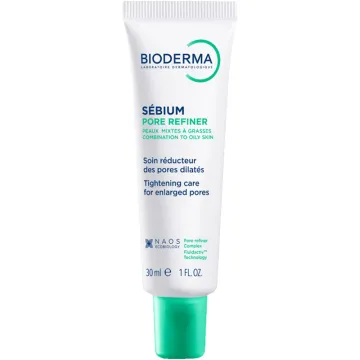
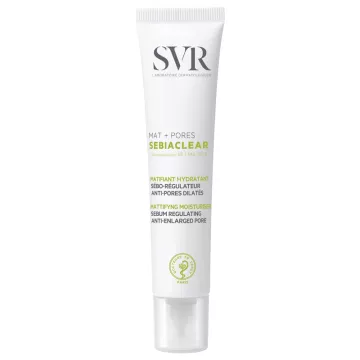
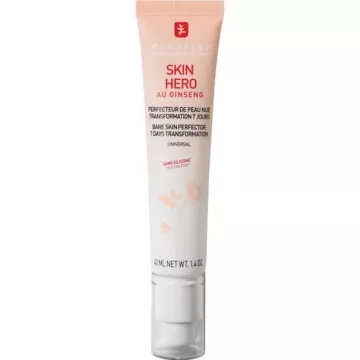
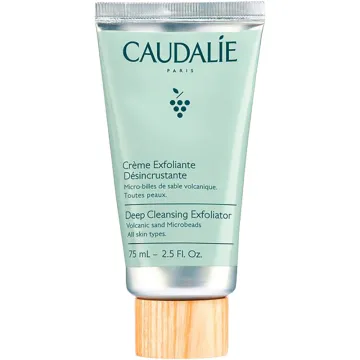
Skin texture refers to the surface texture of the epidermis: its smoothness, how soft it feels to the touch, and the way it reflects light. Refined skin texture results in a smooth, even skin surface without visible roughness or irregularities in texture, achieved primarily through regular exfoliation. Contrary to popular belief, refining skin texture does not involve tightening pores, which do not have a structural mechanism for opening or closing: the observed improvement results from optimized cell turnover and a reduction in residues that visually accentuate their appearance.
Several factors affect the evenness of skin texture: the accumulation of dead skin cells on the surface, excess sebum that locally thickens the skin’s texture, repeated sun exposure that thickens the stratum corneum, and skin aging, which naturally slows down cell renewal. A dull complexion often accompanies an uneven skin texture, as both conditions share a common cause linked to the buildup of dead skin cells on the skin’s surface.
Lactic acid, a gentle alpha-hydroxy acid, helps remove dead skin cells from the surface while providing a moisturizing effect, making it particularly suitable for sensitive skin types seeking to refine their texture without irritation.
An uneven skin texture diffuses light unevenly, which visually accentuates a dull complexion and a lackof radiance. By refining the skin’s surface texture, light is reflected more evenly, giving the impression of brighter skin without any active ingredient directly affecting pigmentation or radiance in the strict sense.
An effective routine combines gentle daily cleansing, targeted weekly exfoliation, and appropriate hydration to support the skin’s barrier function during cell renewal. Niacinamide complements this routine by regulating sebum production, a factor that contributes to localized thickening of the skin texture in combination-to-oily skin types.
Using too many exfoliating ingredients or increasing the frequency of exfoliation beyond what your skin can tolerate weakens the skin barrier rather than refining skin texture long-term, with a risk of sensitization and inflammatory reactions. Daily sun protection is essential after any exfoliating treatment, as the newly exposed skin is temporarily more sensitive to UV rays.