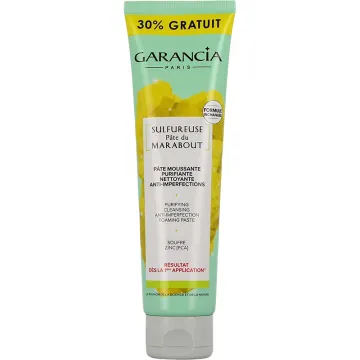
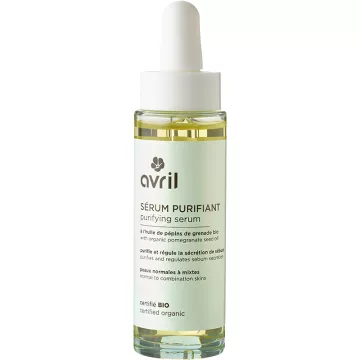
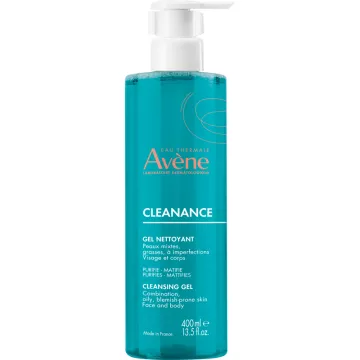
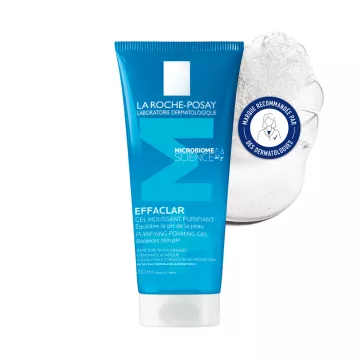
What is a purifying skincare product, and how does it work on the skin?
A purifying skincare product is a cosmetic formulated to deeply cleanse the skin by removing impurities, excess sebum, and dead skin cells from the surface of the epidermis.
This type of treatment helps promote a more even and radiant complexion and visually minimizes the appearance of blemishes.
There are several possible mechanisms of action depending on the active ingredients: sebum absorption byclay or charcoal, exfoliation by mild acids, and unclogging of pores by sebum-regulating active ingredients.
A cosmetic purifying treatment does not “detoxify” the body: only the liver and kidneys eliminate actual toxins. The term “purifying” here refers to a deep cleansing of the skin.
Who are purifying skincare products recommended for?
Purifying treatments are particularly suitable for several skin types:
- Oily skin: controls shine and unclogs pores.
- Combination skin: targeted action on the T-zone (forehead, nose, chin).
- Blemish-prone skin: visually improves the skin’s appearance.
- Skin exposed to urban pollution or secondhand smoke.
- Occasionally congested skin (due to hormonal changes, stress, or an unbalanced diet).
Adjust the frequency and formula according to skin type; dry or sensitive skin should opt for very gentle active ingredients.
What active ingredients are found in a purifying skincare product?
Several cosmetic active ingredients characterize a purifying skincare product:
- Clay (green, white, pink, rhassoul): known for its absorbent and adsorbent properties.
- Activated charcoal: captures impurities on the skin’s surface.
- Salicylic acid (BHA): a gentle exfoliant that unclogs pores. Photosensitizing (minimum SPF 30), **not recommended during pregnancy or while breastfeeding**.
- Glycolic acid (AHA): exfoliates dead skin cells on the surface and supports skin renewal. Photosensitizing; not recommended during pregnancy.
- Niacinamide: soothes feelings of discomfort and helps regulate shine.
- Zinc: sebum-regulating active ingredient.
Essential oils (tea tree, lavender, lemon): strict precautions: not recommended for pregnant or breastfeeding women, infants, or children under 3 years of age; possible contact allergy; skin test required. Citrus essential oils are **photosensitizing** (avoid sun exposure after application).
Incorporating a purifying treatment into your daily routine?
To effectively incorporate a purifying treatment:
- Start by using it 1 to 2 times a week to observe your skin’s reaction.
- Apply to clean skin after removing makeup and gently cleansing.
- Follow the recommended application time (usually 10 to 15 minutes for masks; do not let them dry completely).
- Rinse with lukewarm water using gentle circular motions.
- Follow with a moisturizer suited to your skin type to restore your skin’s comfort.
- In the morning: Apply sunscreen with an SPF of at least 30 (essential if exfoliating products were used the previous day).
Adjust the frequency based on your skin’s reaction; if irritation occurs, space out applications further.
What are the long-term benefits of a regular purifying skincare routine?
Regular and sensible use of a purifying skincare routine can visibly improve several aspects of skin quality:
- Visible reduction in the appearance of enlarged pores.
- Visible reduction in the appearance of blemishes.
- Improved skin texture: skin appears clearer and smoother.
- Helps control shine on oily or combination skin.
- A more even and radiant complexion.
Consistent, measured use is more important than frequency: 1 to 2 properly applied treatments per week are more effective than excessive daily use.
Can the purifying treatment be combined with other treatments?
The purifying treatment can be incorporated into a multi-step skincare routine with a few precautions:
- Always follow up withmoisturizer: a purifying treatment can be drying, so moisturizer restores skin comfort.
- Useantioxidant or soothing serums on days when you’re not using the purifying treatment.
- Compatibleanti-aging products, used alternately with the purifying treatment to avoid overstimulating the skin.
- Chemical peels: mild at-home peels (low-concentration AHAs) are compatible; medium and deep peels = **medical procedures reserved for dermatologists**.
Avoid combining strong active ingredients (retinol + AHA/BHA + concentrated vitamin C) on the same night: risk ofcumulative irritation.
Purifying treatment or daily cleanser?
Purifying treatments and daily cleansers play complementary roles:
- Daily cleanser: Use morning and evening; removes impurities, sebum, and pollution residue. Gentle, surface-level action.
- Purifying treatment: use 1 to 2 times a week; provides a more intensive action targeting pores and excess sebum. Often enriched with sebum-regulating or exfoliating active ingredients.
A purifying treatment is not a substitute for a daily cleanser: it is a weekly supplement for deep cleansing.
Are purifying treatments suitable for sensitive skin?
Sensitive skin can benefit from a purifying treatment, provided you choose a suitable formula:
- Mild clays (white, pink) rather than green clay (which is more absorbent).
- Free of high concentrations of denatured alcohol.
- Fragrance-free and free of essential oils.
- Hypoallergenic and dermatologically tested.
- No exfoliating acids in high concentrations.
Always perform a skin test on the inner elbow 48 hours before first use.
If you have a skin condition (rosacea, eczema, seborrheic dermatitis), consult a dermatologist before introducing a new skincare product.
How do I know if my purifying skincare product is effective?
There are several signs that indicate a purifying skincare product is effective:
- Visible reduction in blemishes over the course of several weeks.
- Visible reduction in shine after use.
- A clean and fresh feeling after application.
- Skin that looks clearer, smoother, and more even.
- Skin texture feels more even to the touch.
Signs of incompatibility: persistent redness, marked dryness, burning, stinging, or tightness after application. In these cases, space out applications, switch to a gentler formula, or consult a dermatologist.
What is the ideal frequency for applying a purifying treatment?
The frequency of using a purifying skincare product depends on skin type and skin sensitivity:
- Oily and blemish-prone skin: 1 to 2 times a week, up to a maximum of 2–3 times if there’s a significant need (without exceeding this to avoid irritating and disrupting the hydrolipidic film).
- Combination skin: Once a week, focusing on the T-zone.
- Dry skin: Once a week at most, using a gentle formula.
- Sensitive or reactive skin: Once a week or every 15 days, using a very gentle formula.
Monitor your skin’s response and adjust if you experience tightness, dryness, orirritation.
Natural Alternatives to Purifying Skincare Products?
Several natural alternatives can complement commercial purifying skincare products:
- Clay masks: green (oily skin), rhassoul (combination skin), white (sensitive skin).
- Activated charcoal powder, to be mixed with a hydrosol or floral water.
- Purifying hydrosols: tea tree, rosemary, sage, in a gentle lotion.
- Hot waterfacial steam (without essential oils for reactive skin) to open the pores before applying the mask.
Important precautions:
- Coconut oil: highly comedogenic; avoid on acne-prone, oily, or combination skin (may cause or worsen breakouts).
- Raw honey: Do not apply to broken or severely inflamed skin; not recommended for infants under 1 year of age (risk of infant botulism); possible allergy to bee products.
- Lemon, citrus juice: **photosensitizing** on the skin; avoid before sun exposure (risk of phytophotodermatitis, long-lasting spots).
- Pure baking soda: disrupts the skin’s pH balance; harsh.
“Natural” does not mean “risk-free”: a skin test is still essential. For persistent or severe acne, consult a dermatologist.