How is cornflower floral water different from the extract or herbal tea?
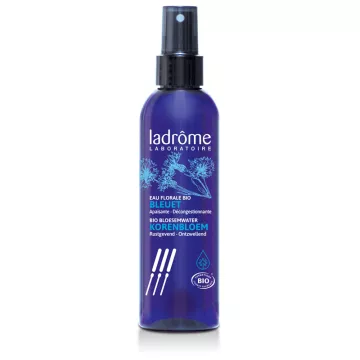
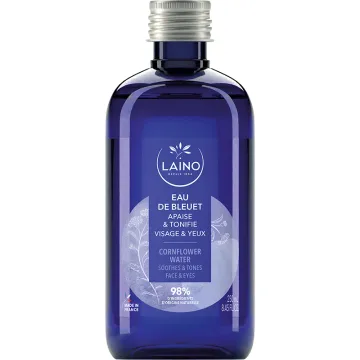
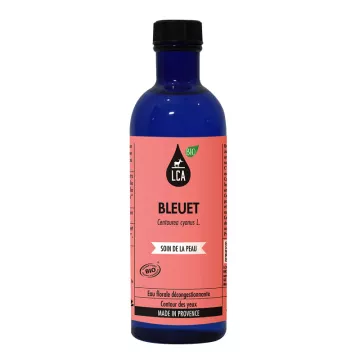
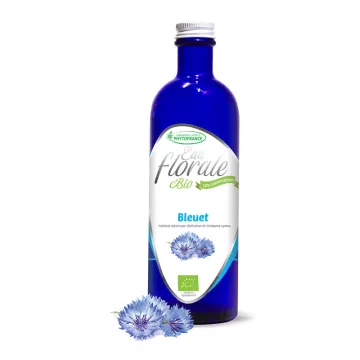
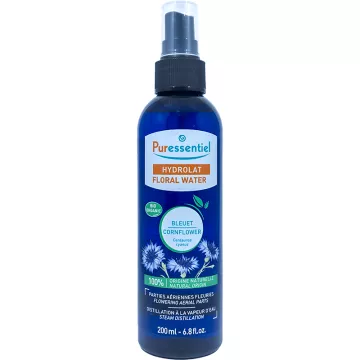
Cornflower floral water (Centaurea cyanus floral water) is a byproduct of the steam distillation of fresh flowers. It contains the flowers’ water-soluble aromatic and polyphenolic compounds—anthocyanins, flavonoids, and tannins—in low concentrations but immediately bioavailable to the skin. It is the gentlest and most direct form for daily use on the face and around the eyes.
It differs from cornflower extract (which is more concentrated and used in serums) and cornflower tea (for internal use). On the INCI label: “Centaurea cyanus flower water”—alcohol-free and preservative-free in the highest-quality versions.
What are the specific uses of cornflower floral water for the eyes?
This is the use for which cornflower floral water is irreplaceable—and by far the best known of all floral waters for this purpose.
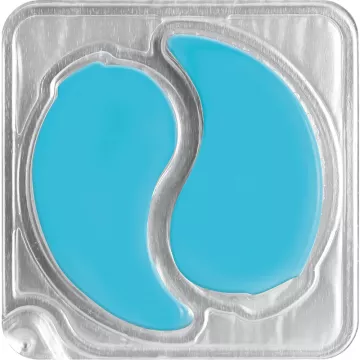
- Anti-fatigue compresses: Soak two cotton pads in chilled floral water and place them on closed eyelids for 10 minutes—the anthocyanins support microcirculation around the eyes and reduce morning puffiness
- Red and irritated eyes (from screens, pollution, contact lenses): Lightly mist onto closed eyelids or apply with a damp cotton pad—never instill directly into the eye
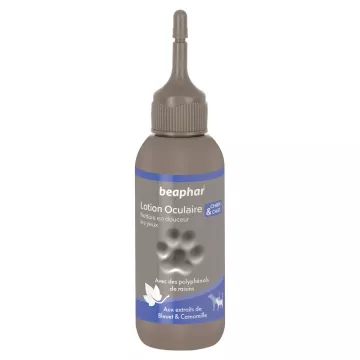
- Cleaning a baby’s eyelids: pure, alcohol-free floral water and a sterile cotton pad—gentle and well-tolerated from the first few months onward
- Combine withwitch hazel hydrosol: equal parts cornflower and witch hazel in a compress—cornflower soothes, witch hazel tightens and drains—the most complete synergy for tired and puffy eyes
- See our eye contour and eye care products
How can you incorporate cornflower floral water into your skincare routine?
Its gentleness makes it suitable for all skin types—including the most sensitive skin and even babies’ skin.
- Morning toner: After cleansing, mist or apply with a cotton pad to the face—slightly herbaceous and floral scent, dries quickly— sensitive skin is soothed before applying moisturizer
- Daytime mist: Spray directly onto the face, whether wearing makeup or not—immediate freshness, light surface hydration—perfect for long days or air-conditioned environments
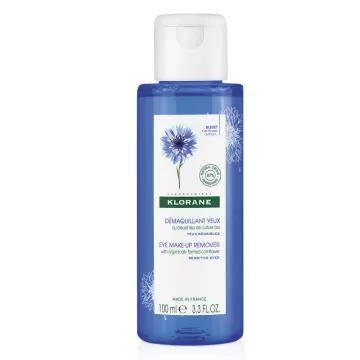
- Makeup Remover Aid: Soak a cotton pad with cornflower floral water for a second pass after using makeup remover—soothes any irritating residue on the eyelids
- Scalp care: Spray onto the scalp after shampooing or between washes—relieves mild itching and provides a gentle astringent effect on sensitive scalps
How to Choose and Store High-Quality Cornflower Floral Water?
Not all cornflower floral waters are created equal—here are a few essential criteria.
- INCI: “Centaurea cyanus flower water” alone—without “aqua” listed first (which would indicate a dilution of the floral water), and free of alcohol and chemical preservatives
- Organic and gentle distillation: anthocyanins are sensitive to heat—rapid distillation at low temperatures better preserves the active ingredients
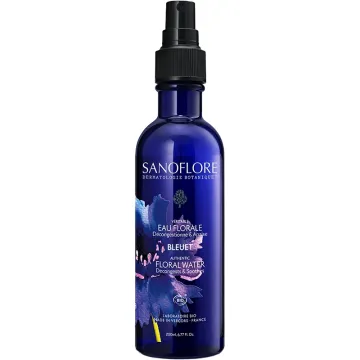
- Opaque or tinted glass bottle: polyphenols and anthocyanins oxidize when exposed to light—avoid clear bottles
- Storage: Must be refrigerated after opening (no preservatives); best-by date 6 months to 1 year—if the floral water smells bad, it is contaminated and should be discarded
- Sign of quality: slightly bluish to clear, with a delicate herbaceous note—a colorless and odorless floral water has likely been distilled too vigorously
What precautions should be taken with cornflower floral water?
- Allergy to Asteraceae (chamomile, mugwort, daisy): contraindicated—test on the inside of the wrist before using on the eyes
- Never instill directly into the eye—use only as compresses or by spraying onto closed eyelids
- Pregnancy and breastfeeding: very well tolerated for external use—alcohol-free floral water only
- Babies and infants: suitable for cleaning the eyelids with sterile cotton — use only organic floral water without preservatives