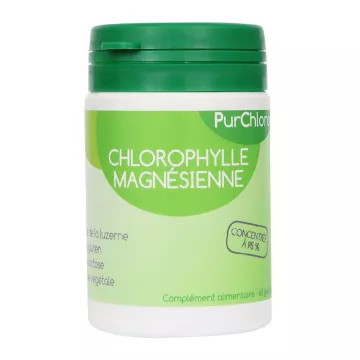
Chlorophyll is a natural green pigment found in most plants. Its name comes from the Greek words “chloros” (green) and “phyllon” (leaf), reflecting its major role in the coloration of plants. It plays an essential role in photosynthesis, the process by which plants capture light energy. It is found in leaves, certain algae, and microalgae, and has long been used as a natural nutritional source.
At the heart of the leaf, chlorophyll absorbs light, primarily in the red and blue wavelengths, while reflecting green light—which explains the familiar color of plants. The captured energy is used to convert carbon dioxide and water into simple carbohydrates. These carbohydrates serve as a source of chemical energy for the plant and, by extension, for the organisms that consume it. Photosynthesis also produces oxygen, a gas essential for the respiration of most living beings.
Chlorophyll contains trace elements, vitamins, and minerals in varying amounts depending on the source. Green vegetables rich in chlorophyll—such as spinach, kale, and lettuce—contribute to a diet rich in micronutrients. Certain concentrated forms, obtained through extraction, are incorporated into dietary supplements or used as natural food coloring.
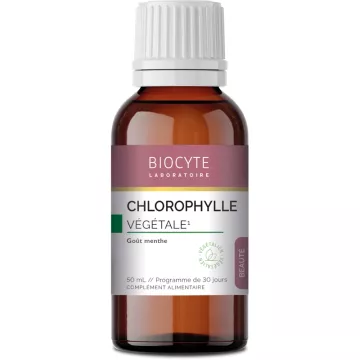
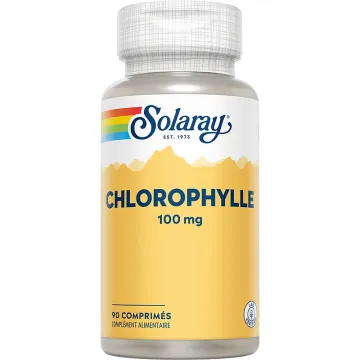
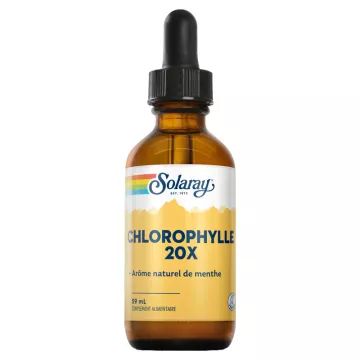
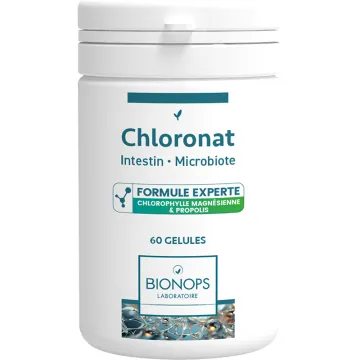
The primary natural source of chlorophyll is a varied diet rich in green vegetables: lettuce, broccoli, arugula, and spinach. Fresh vegetable juices —combining spinach, cucumber, and celery—offer a natural concentration of chlorophyll. There are also specific supplements available in the form of concentrated liquids, drops, or tablets, which can easily be added to water or smoothies.
A few drops of liquid chlorophyll can enhance the color of a sauce or soup. Powdered extracts can be mixed into fruit juices or fortified smoothies, enhancing both color and nutritional value. In pancake or cake batter, a small amount creates a unique result. The flavor is neutral, allowing for easy incorporation into various recipes.
Chlorophyll naturally combines with:
Chlorophyll is generally well tolerated when consumed as part of a normal diet. As a concentrated supplement, an overdose may potentially cause mild digestive discomfort in sensitive individuals. Pregnant or breastfeeding women and individuals under medical treatment should consult a healthcare professional before regularly taking concentrated supplements.
A basic home extraction method involves blending green vegetables with water and then straining out the pulp—the result is more like a green juice than a pure extract. To achieve a high and stable concentration, manufacturers use sophisticated processes (centrifugation, filtration, drying). Regular consumption of fresh, homegrown or store-bought green vegetables remains the most natural and sustainable approach.
Yes, some brands use chlorophyll as a coloring agent or active ingredient in masks, creams, or hair care products. It provides a distinctive green tint and serves as a natural nutritional source in these formulations. Its cosmetic effectiveness depends heavily on the chosen concentration and its synergy with other ingredients.