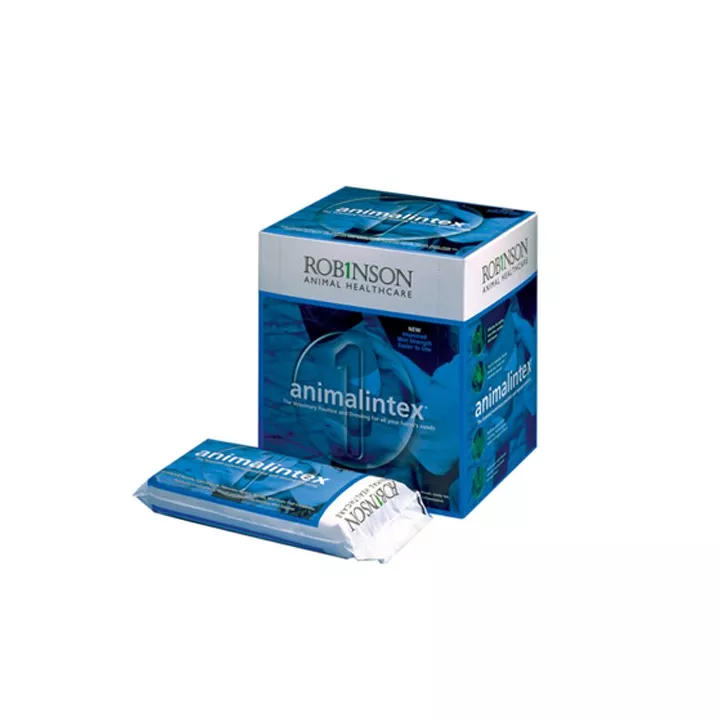
What is Audevard Animalintex Robinson Horse Poultice used for?
Animalintex is a boric acid poultice that can be used dry, cold, or warm:
- Dry: Highly absorbent. It is therefore particularly recommended for weeping wounds.
- When used cold: the cold has a vasoconstrictive effect, which is beneficial for laminitis or bleeding. It also acts as an analgesic (relieves pain) and is therefore used for tendonitis, strains, or sprains.
- Hot: Heat causes vasodilation, which improves the supply of white blood cells and oxygen, promoting proper healing. Heat also promotes vascular permeability, leading to better drainage. It is therefore used in particular for abscesses, seime, street nail, lymphangitis, mollettes, and pressure sores.
Animalintex is a multipurpose dressing consisting of three layers:
- Nonwoven layer: non-adhesive to protect the healing wound.
- Cotton + boric acid + tragacanth: high-quality cotton for better absorption, containing a mild antiseptic and a draining gel.
- Outer polyethylene layer: waterproof protection against external irritants, maintains the poultice at the correct temperature.
When it comes to caring for our four-legged friends, it’s essential to have versatile and effective products on hand to treat a variety of conditions. That’s where Audevard’s Robinson Animalintex Poultice comes in—a versatile product designed to meet a variety of veterinary care needs. In this product sheet, we’ll explore in detail the features, benefits, and uses of this unique poultice for animals.
The Robinson Animalintex Poultice is an exceptionally versatile product that can be used in three different ways to meet your pet’s specific needs:
When used dry, this poultice is highly absorbent. It is therefore particularly recommended for weeping wounds. By absorbing excess moisture, it helps keep the wound area clean and promotes an environment conducive to healing.
Cold has vasoconstrictive properties, making it beneficial in certain situations such as laminitis or bleeding. In addition, it has an analgesic effect, which means it can soothe pain. Consequently, this poultice is used for tendinitis, muscle strains, or sprains to reduce inflammation and relieve pain.
When applied warm, this poultice causes vasodilation, which promotes a better supply of white blood cells and oxygen to the area. This is beneficial for optimal healing. In addition, the heat stimulates vascular permeability, which promotes better drainage. It is therefore recommended for conditions such as abscesses, erysipelas, ingrown toenails, lymphangitis, blisters, or bedsores.
The Animalintex Robinson Poultice is designed with three distinct layers to ensure optimal results with every use:
The top layer of the poultice is a non-woven, non-adhesive fabric. This means it does not stick to the wound, thus preserving the growing scar tissue. It protects the wound area while allowing the poultice to absorb moisture.
The middle layer is made of high-quality cotton, which provides optimal absorption. In addition, this layer contains boric acid, a mild antiseptic, and tragacanth, a draining gel. This combination ensures that the poultice keeps the wound area clean while helping to reduce inflammation.
The outer layer of the poultice is made of polyethylene, which makes it impervious to external contaminants. It also maintains the poultice at the correct temperature, which is essential for hot application.
We also offer the Balsamic Air liquid supplement from the Audevard veterinary laboratory at the best price in our online pharmacy.
How do you use this poultice?
Clean the skin before applying the poultice. Cut Animalintex to the desired size.
Apply Animalintex with the clear plastic film facing outward (the non-woven fabric in contact with the horse). Secure Animalintex with EQUIWRAP cohesive tape. Ensure the poultice is completely covered by the tape.
- As a dry dressing: ApplyAnimalintex directly to the skin.
- As a cold poultice: Place Animalintex in a clean container, plastic side up. Pour in cold water (saline solution or water that has been boiled and then cooled). Once the poultice is saturated, gently remove Animalintex and allow the excess liquid to drain off (the poultice should be damp, but not waterlogged). Mold the poultice around the horse’s body.
- For a warm poultice: Follow the method described above using lukewarm water (approximately 38°C).