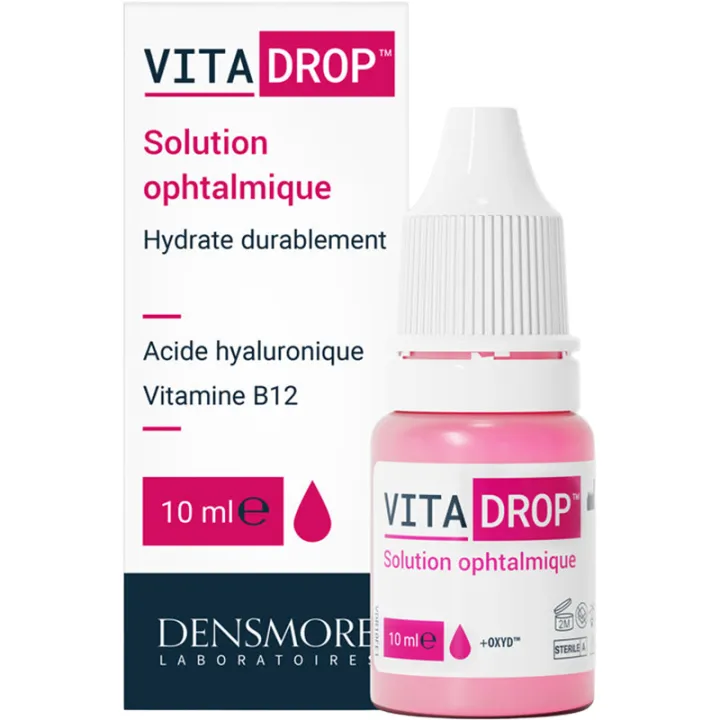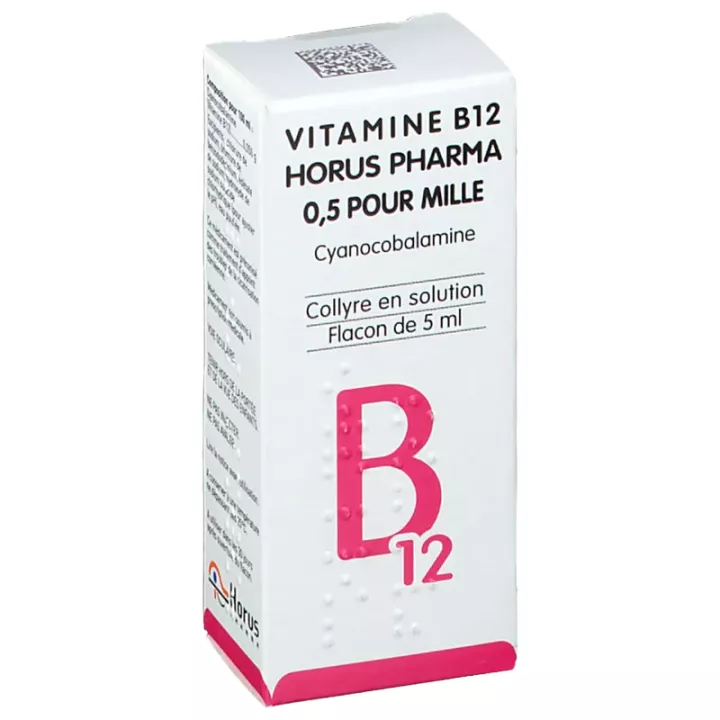
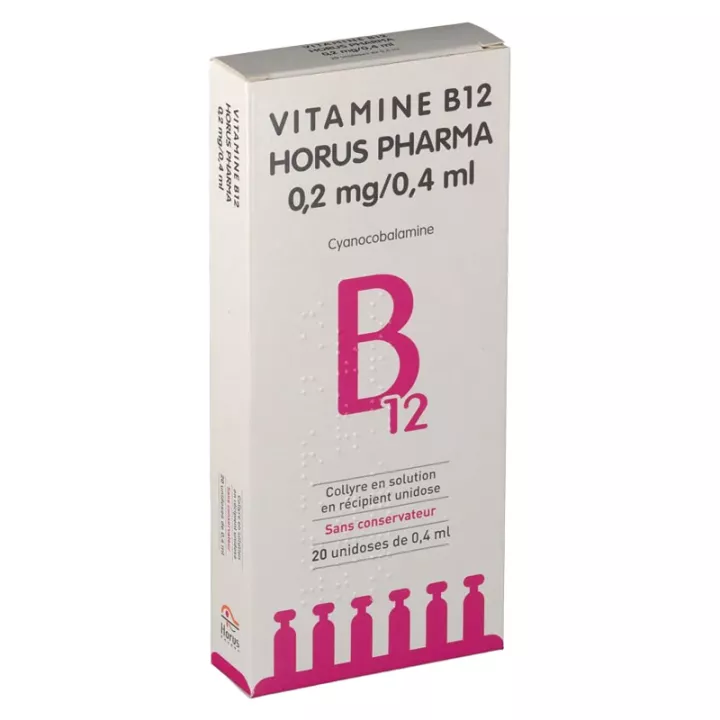
Horus Pharma Vitamin B12 0.05% Eye Drops at our organic pharmacy—relieve dry, irritated eyes with these Vitamin B12-based eye drops. A protective, antioxidant formula to soothe, moisturize, and promote regeneration of the ocular surface.

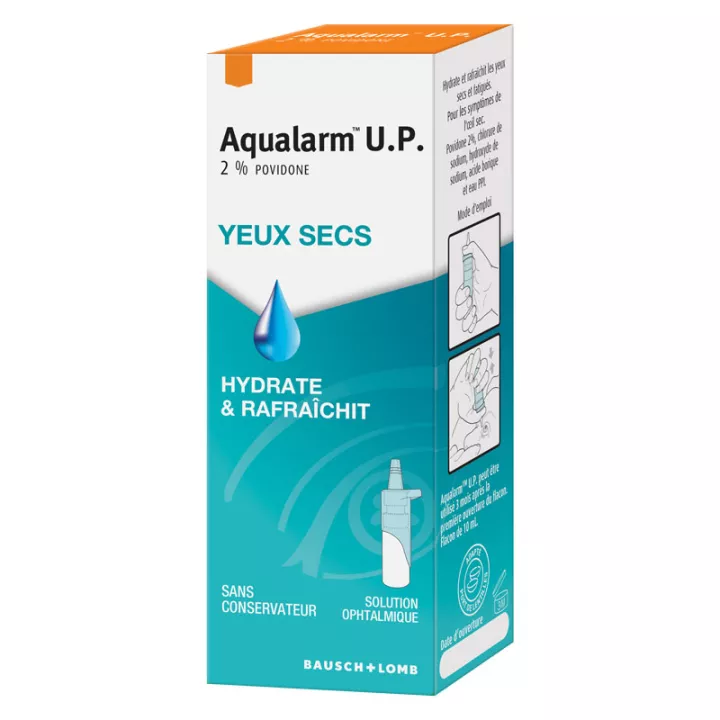
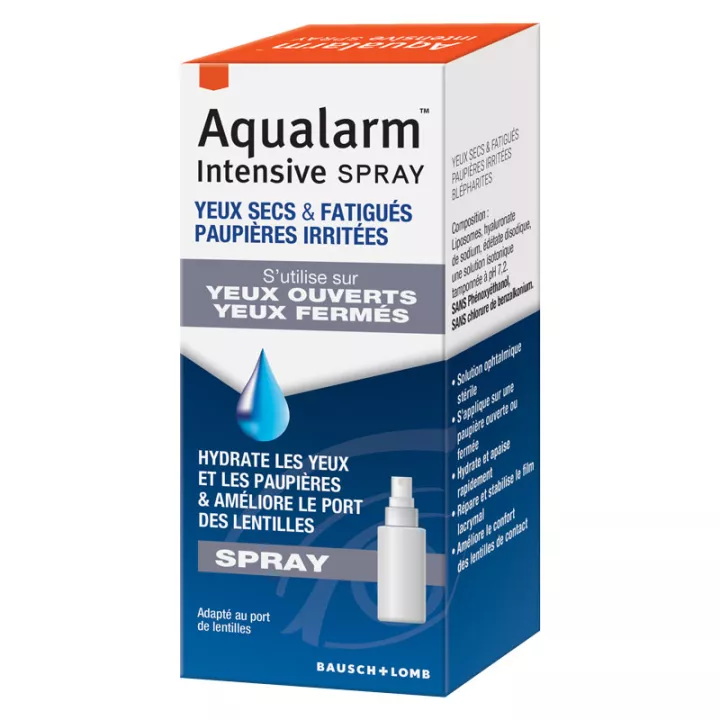 Aqualarm Intensive Spray for Dry and Tired Eyes and Irritated Eyelids, 10 ml
Your eye health is precious, and Vitamin B12 plays an essential role in maintaining it. Horus Pharma’s Vitamin B12 0.05% eye drops are designed tomoisturize, nourish, and protect your eyes, allowing you to enjoy optimal vision and lasting comfort.
Vitamin B12 is essential for your eye health. Our eye drops are enriched with this vitamin, which deeply nourishes your eyes, strengthens the cornea, and protects the ocular surface.
Its special formula containing Vitamin B12 works deeply to provide your eyes with the care they need every day. By using these eye drops regularly, you can maintain optimal hydration, nourish the eye tissues, and protect your eyes from external irritants.
The 0.05% Vitamin B12 eye drops intensely moisturize your eyes for optimal comfort. Its formula, rich in vitamin B12 , acts as a true reservoir of moisture, helping to prevent and relieve dry eyes. By instilling a few drops of these eye drops into your eyes, you can instantly experience a sensation of freshness and comfort, even in the driest environments.
In addition to its moisturizing action, the 0.05% Vitamin B12 eye drops deeply nourish the eye tissues for healthy eyes. Vitamin B12, known for its nourishing properties, helps strengthen the skin barrier and prevent dehydration, thereby offering long-lasting protection against irritation and external aggressors. By using these eye drops regularly, you can maintain your eye health and prevent eye problems related to dryness.
If you suffer from dry eyes, the 0.05% Vitamin B12 Eye Drops are an effective solution for deeply moisturizing your eyes, thereby relieving burning, stinging, and dryness. Our formula is designed to be gentle on your eyes. It contains no harsh preservatives, making it suitable even for sensitive eyes.
By nourishing your eyes and reducing irritation, our eye drops help you maintain clear and comfortable vision, no matter what your daily activities may be.
We also offer Elixya Vitamin B12 Moisturizing Eye Drops 10 ml, ideal for immediate and long-lasting hydration of your eyes.
Instructions for use of these eye drops
For adults and children over 6 years of age: 1 to 2 drops in each eye, as needed, up to 4 times a day.
Share your feedback on the usage instructions and dosage for Horus Pharma Vitamin B12 0.05% Eye Drops with our partner Verified Reviews after your purchase.
Precautions for use:
Ingredients
| 0.5‰ eye drops: | per bottle |
| Cyanocobalamin or vitamin B12 | 2.5 mg |
Excipients:sodiumchloride, benzododecinium bromide, sodium edetate, sodium hydroxide or hydrochloric acid (to adjust the pH), purified water.
Packaging
5-ml bottle or box of 20 single-dose vials of 0.4 ml - Available at the best price in our online pharmacy.
How often can I use the 0.05% vitamin B12 eye drops to moisturize my eyes?
You can use these eye drops as needed, up to several times a day, or as recommended by your healthcare provider.
Are these eye drops suitable for contact lens wearers?
Yes, these eye drops are compatible with contact lenses. You can safely use them while wearing your lenses.
Are there any side effects associated with using these eye drops?
Minor side effects, such as temporary stinging, may occur. If symptoms persist or worsen, stop using the product and consult a healthcare professional.
Pharmacovigilance Report an adverse drug reaction(s)
NOTICE
ANSM - Updated on : 11/10/2013
Product name
VITAMIN B12 HORUS PHARMA 0.5 PER THOUSAND, eye drops solution
Cyanocobalamin
Box
Please read this leaflet carefully before using this medicine. It contains important information for your treatment.
If you have any further questions, please ask your doctor or pharmacist.
- Keep this leaflet as you may need to read it again.
- If you need further information or advice, ask your pharmacist.
- If symptoms worsen or persist, consult a doctor.
- If you notice any side effects not listed in this leaflet, or if you experience any of the effects listed as serious, please tell your doctor or pharmacist.
Leaflet contents
In this leaflet :
1. WHAT IS VITAMIN B12 HORUS PHARMA 0.5 PER THOUSAND, eye drops solution AND WHAT IS IT USED FOR?
2. WHAT DO YOU NEED TO KNOW BEFORE USING VITAMIN B12 HORUS PHARMA 0.5 PER THOUSAND, eye drops solution?
3. HOW DO I USE VITAMIN B12 HORUS PHARMA 0.5 PER THOUSAND, eye drops solution?
4. WHAT ARE THE POSSIBLE SIDE EFFECTS?
5. HOW TO USE VITAMIN B12 HORUS PHARMA 0.5 PER THOUSAND, eye drops solution?
6. ADDITIONAL INFORMATION
1. WHAT IS VITAMIN B12 HORUS PHARMA 0.5 PER THOUSAND, eye drops solution AND WHAT IS IT USED FOR?
Pharmacotherapeutic class
This medicine is an ocular healing agent.
Therapeutic indications
This drug is recommended as an adjunctive treatment for corneal scarring disorders.
2. WHAT DO I HAVE TO KNOW BEFORE USING VITAMIN B12 HORUS PHARMA 0.5 PER THOUSAND, eye drops solution?
List of information required before taking the medicine
Not applicable.
Contraindications
Never use VITAMIN B12 HORUS PHARMA 0.5 PER THOUSAND, eye drops solution:
if you are allergic (hypersensitive) to the active substance or to any of the other ingredients contained in VITAMIN B12 HORUS PHARMA 0.5 PER THOUSAND, eye drops solution.
Precautions for use; special warnings
Take special care with VITAMIN B12 HORUS PHARMA 0.5 PER THOUSAND, eye drops solution:
Avoid touching the eye or any other surface with the tip of the bottle.
If you wear contact lenses, they should not be worn for the duration of treatment, as VITAMIN B12 HORUS PHARMA 0.5 PER THOUSAND, eye drops will discolour.
Interactions with other drugs
Taking or using other medicines
If you are taking or have recently taken any other medicines, including medicines obtained without a prescription, talk to your doctor or pharmacist.
If you need to use another eye drop, space out the 2 administrations by 15 minutes.
Interactions with food and drink
Not applicable.
Interactions with herbal products or alternative therapies
Not applicable.
Use during pregnancy and breast-feeding
Pregnancy and breast-feeding
Ask your doctor or pharmacist for advice before taking any medication.
Sportsmen
Not applicable.
Effects on ability to drive and use machines
Driving vehicles and using machines
Temporary visual discomfort may generally be experienced after using eye drops in the eye.
You should wait until your vision returns to normal before driving a vehicle or operating machinery.
List of excipients
Not applicable.
3. HOW TO USE VITAMIN B12 HORUS PHARMA 0.5 PER THOUSAND, eye drops solution?
Instructions for proper use
Not applicable.
Dosage, Method and/or route(s) of administration, Frequency of administration and Duration of treatment
Dosage
Always follow the dosage instructions given by your doctor. If in doubt, consult your doctor or pharmacist.
The usual dose is 1 drop in the eye(s) to be treated, 3 to 4 times a day if necessary.
Directions for use
For use in the eyes only.
To ensure proper use of eye drops, certain precautions must be taken:
Wash hands thoroughly before use,
Do not touch your eye, eyelids or other surfaces with the tip of the bottle,
Do not use if the cap appears broken before use,
Stand in front of a mirror.
|
|
|
|
|
1. Tilt your head back slightly and look up.
2. With a clean finger, gently pull the lower eyelid until a small pocket appears.
3. Turn the bottle upside down and press to release 1 drop into the eye to be treated.
4. Release the lower eyelid and close your eye. Wipe away any excess.
If a drop falls next to your eye, start again.
If you need to treat both eyes, repeat these steps for the other eye.
Replace the cap and close the bottle immediately after use.
Frequency of administration
Distribute 3 or 4 instillations throughout the day, as needed.
Duration of treatment
If symptoms persist or worsen, consult your doctor to adjust your treatment.
Symptoms and instructions in case of overdose
If you have used more VITAMIN B12 HORUS PHARMA 0.5 PER THOUSAND, eye drops solution than you should have, contact your doctor or pharmacist:
Consult your doctor or pharmacist.
Instructions in case of missed dose(s)
If you forget to use VITAMIN B12 HORUS PHARMA 0.5 PER THOUSAND, eye drops solution:
Do not use a double dose to make up for the one you have forgotten, but simply continue your treatment.
Risk of withdrawal syndrome
Not applicable.
If you have any further questions about the use of this medicine, please ask your doctor or pharmacist.
4. WHAT ARE THE POSSIBLE SIDE EFFECTS?
Description of side effects
Like all medicines, VITAMIN B12 HORUS PHARMA 0.5 PER THOUSAND, eye drops solution is likely to have undesirable effects, although not everyone is subject to them.
The following adverse reactions have been reported with undetermined frequency (cannot be estimated on the basis of available data):
Immune system disorders
Allergic reaction.
Eye disorders
Transient irritation (stinging, burning).
If you notice any undesirable effects not mentioned in this leaflet, or if any undesirable effects become serious, please inform your doctor or pharmacist.
5. HOW TO USE VITAMIN B12 HORUS PHARMA 0.5 PER THOUSAND, eye drops solution?
Keep out of the reach and sight of children.
Expiration date
Do not use VITAMIN B12 HORUS PHARMA 0.5 PER THOUSAND, eye drops after the expiration date stated on the box or bottle after EXP. The expiry date refers to the last day of the month.
Storage conditions
Store at a temperature not exceeding 25°C.
Any opened bottle must be used within 30 days.
If necessary, warnings against certain visible signs of deterioration
Medicines must not be disposed of down the drain or with household waste. Ask your pharmacist what to do with unused medicines. These measures will help protect the environment.
6. FURTHER INFORMATION
Complete list of active ingredients and excipients
What does VITAMIN B12 HORUS PHARMA 0.5 PER THOUSAND, eye drops solution contain?
The active substance is: cyanocobalamin (vitamin B12).
The other components are: sodium chloride, benzododecinium bromide, sodium edetate, sodium hydroxide or hydrochloric acid (for pH adjustment), purified water.
Pharmaceutical form and contents
What is VITAMIN B12 HORUS PHARMA 0.5 PER THOUSAND, eye drops solution and what does it contain?
It is a clear, pink eye drop solution.
Each box contains 1 plastic bottle of 5 ml.
Name and address of marketing authorization holder and manufacturing authorization holder responsible for batch release, if different
Holder
horus pharma
148 avenue Georges Guynemer
cap vAr
06700 saint-laurent-du-var
Operator
HORUS PHARMA
148 avenue Georges Guynemer
Cap Var
06700 SAINT-LAURENT-DU-VAR
Manufacturer
ALLERGAN PHARMACEUTICALS IRELAND
WESTPORT
CO. MAYO
IRELAND
Drug names in member states of the European Economic Area
Not applicable.
Date of approval of the package leaflet
This leaflet was last approved on {date}.
MA under exceptional circumstances
Not applicable.
Internet information
Detailed information on this product is available on the Afssaps (France) website.
Information reserved for healthcare professionals
Not applicable.
Other
Not applicable.
Ce collyre cicatrisant contient de la vitamine B12.
Il est utilisé dans le traitement d'appoint des troubles de la cicatrisation de la cornée.
Les prix mentionnés ne tiennent pas compte des « honoraires de dispensation » du pharmacien.
| p 5 ml | p 0,4 ml | |
| Cyanocobalamine (vitamine B12) | 2,5 mg | 2 mg |
| Benzododécinium bromure | + |
Le flacon de 5 ml ne doit pas être utilisé en cas d'allergie aux antiseptiques de la famille des ammoniums quaternaires (présence de benzododécinium).
Toute plaie oculaire, même minime, peut avoir des conséquences graves. Elle doit faire l'objet d'un examen spécialisé, notamment en cas de rougeur, douleur et/ou vision floue.
Ce collyre peut provoquer une coloration irréversible des lentilles de contact souples hydrophiles. Celles-ci ne pourront être réutilisées qu'après l'arrêt du traitement.
Ce collyre peut interagir avec d'autres collyres : respectez un intervalle de 15 minutes entre deux instillations.
L'utilisation ponctuelle de ce médicament pendant la grossesse ou l'allaitement ne semble pas poser de problème particulier.
Tirer la paupière inférieure vers le bas tout en regardant vers le haut et déposer une goutte de collyre entre la paupière et le globe oculaire (cul-de-sac conjonctival).
1 goutte, 3 ou 4 fois par jour.
Évitez de mettre l'embout du flacon en contact avec l'œil.
Une unidose contient une quantité de collyre suffisante pour traiter les deux yeux.
L'application correcte du produit peut nécessiter une aide, notamment chez une personne handicapée ou âgée.
Ne conservez pas le flacon de 5 ml plus d'un mois après une première utilisation. Les unidoses doivent être utilisées immédiatement après ouverture et ne doivent pas être conservées pour une instillation ultérieure.
Picotement, brûlure oculaire passagère.
Liée à la présence de benzododécinium : réaction allergique (flacon de 5 ml).
Réaction cutanée (démangeaisons, boutons, gonflement) ou malaise général apparaissant après un contact avec une substance particulière, l'utilisation d'un médicament ou l'ingestion d'un aliment. Les principales formes d'allergie sont l'eczéma, l'urticaire, l'asthme, l'œdème de Quincke et le choc allergique (choc anaphylactique). L'allergie alimentaire peut également se traduire par des troubles digestifs.
Famille d'antiseptiques présents dans de nombreux médicaments d'usage local. Généralement bien supportés, ils peuvent cependant donner lieu à de rares allergies.
Substance qui détruit localement les bactéries, réduisant leur nombre et empêchant leur prolifération. Certains antiseptiques sont également actifs sur les champignons microscopiques et les virus.
Médicament servant au traitement local d'affections des yeux.
Partie centrale transparente de l'œil, qui recouvre la pupille et l'iris.
Espace formé lorsqu'on tire vers le bas la paupière inférieure, qui se décolle de l'œil et forme une cavité. C'est dans celle-ci que doivent être déposées les gouttes de collyre et les pommades ophtalmiques. Le médicament se répartit naturellement sur la totalité de l'œil. Il sera éliminé, comme les larmes, par le canal lacrymal, qui évacue les larmes vers le nez.
Maladie se manifestant par une rougeur et une douleur vive touchant une articulation (celle du gros orteil le plus souvent), due à une accumulation de cristaux d'acide urique.
Consultez l'article : Goutte
Dispositif optique souple ou rigide placé sur la cornée, destiné à corriger un défaut de la vision.
Les lentilles utilisées actuellement sont toutes en matière plastique. Il en existe deux types :
Réaction due à l'hypersensibilité de l'organisme à un médicament. Les réactions allergiques peuvent prendre des aspects très variés : urticaire, œdème de Quincke, eczéma, éruption de boutons rappelant la rougeole, etc. Le choc anaphylactique est une réaction allergique généralisée qui provoque un malaise par chute brutale de la tension artérielle.
Consultez l'article : Peut-on être allergique aux médicaments ?
Substance indispensable à la croissance et au bon fonctionnement de l'organisme. Les besoins en vitamines sont normalement couverts par une alimentation variée. Dans les pays développés, seule la carence en vitamine D, chez le jeune enfant ou le vieillard peu exposés au soleil, justifie une supplémentation systématique. Un apport supérieur aux besoins, par des médicaments notamment, peut être à l'origine d'un surdosage et de troubles divers (vitamines A et D essentiellement).
Consultez l'article : Les vitamines.