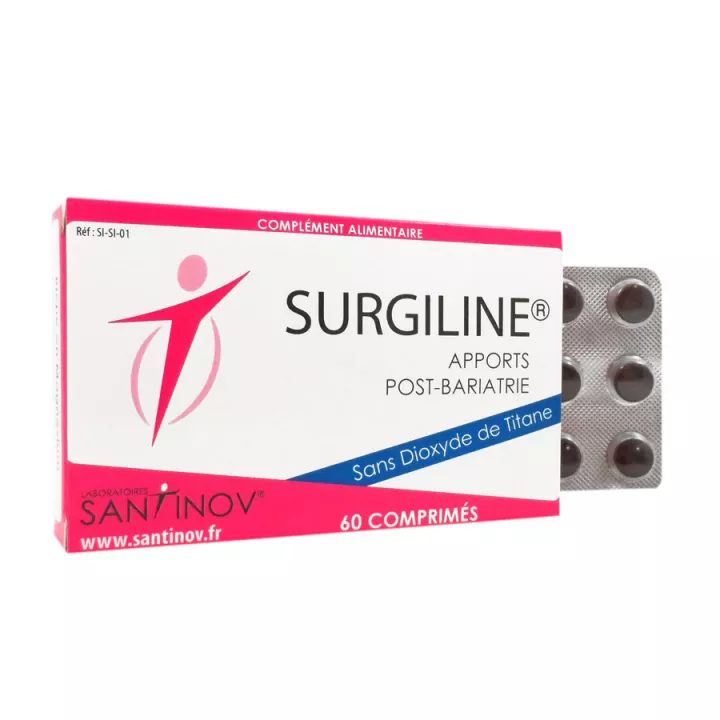
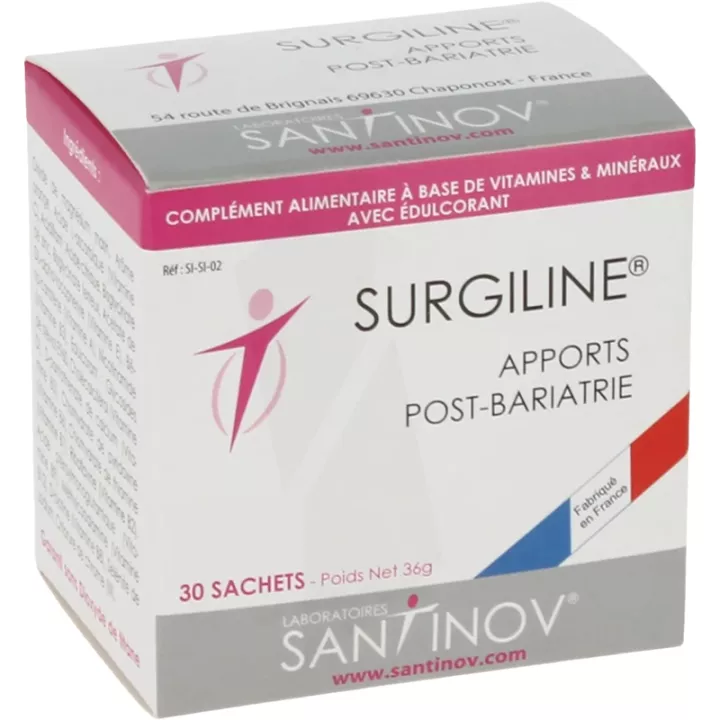
What is Surgiline Bariatric Surgery Supplement used for?
Fatigue, hair loss, bone problems, neurological disorders... Prevent vitamin and mineral deficiencies after bariatric surgery (sleeve gastrectomy, gastric bypass) with SURGILINE® tablets.
Surgiline Bariatric Surgery Supplement 60 tablets is a dietary supplement rich in vitamins and minerals designed to prevent vitamin and mineral deficiencies following bariatric surgery.
Its formula, rich in magnesium, has been specifically developed and dosed to support significant weight loss, particularly following bariatric surgery.
The French National Authority for Health (HAS) recommends systematic, lifelong supplementation in cases such as gastric bypass surgery and for the 12 months following sleeve gastrectomy and gastric band placement.
Main active ingredients:
Iron contributes to normal energy metabolism and helps reduce fatigue,
Iron contributes to the normal functioning of the immune system.
Zinc contributes to normal carbohydrate metabolism, normal cognitive function, and normal protein synthesis,
Zinc contributes to the maintenance of normal bones, hair, and nails.
Vitamin B1 (thiamine) is a water-soluble vitamin (it dissolves in water and is not stored in the body).
Vitamin B1 contributes to normal energy metabolism and normal nervous system function,
Vitamin B1 contributes to normal psychological function
Vitamin D is a fat-soluble vitamin (soluble in fats and lipids, and can be stored by the body).
Vitamin D contributes to the normal absorption and utilization of calcium and phosphorus.
Vitamin D contributes to normal blood calcium levels and the maintenance of normal bones and teeth.
Vitamin D also contributes to the maintenance of normal muscle function and the normal functioning of the immune system.
Magnesium contributes, in particular, to the normal functioning of the nervous system and helps reduce fatigue.
Magnesium also contributes to normal protein synthesis and normal muscle function,
Magnesium contributes to normal energy metabolism.
We also offer UPSA 5-in-1 Multivitamins (30 tablets) at the best price in our online pharmacy
How should you take this vitamin-rich supplement?
Take 2 tablets daily in 1 or 2 doses, preferably in the morning. Swallow the tablets with a glass of water; do not chew.
Share your feedback on the usage instructions and dosage for SURGILINE Bariatric Surgery Supplement (60 tablets) with our partner—verified reviews after your purchase.
Related Products and Alternatives
Surgiline can be combined with other supplements to enhance its effects based on the patient’s specific needs:
- A vitamin D supplement such as ZymaD Vitamin D3 for better bone health,
- A protein supplement to preserve muscle mass,
- Probiotics to support gut flora disrupted after surgery.
For personalized care, it is recommended to combine Surgiline with regular medical follow-ups and blood tests to adjust dosages as needed.
Precautions
- Do not exceed the recommended daily dose
- Use as part of a healthy lifestyle and do not use as a substitute for a varied and balanced diet
- Keep out of reach of children
- Best consumed before the expiration date indicated on the package (Article 24 of Regulation (EU) No. 1169/2011)
- Store in a cool, dry place away from light.
Why use Surgiline after bariatric surgery?
After bariatric surgery, the body undergoes profound changes following a sleeve gastrectomy:
- Reduced nutrientabsorption surface area following a gastrectomy
- Restricted calorie intake,
- Increased risk of nutritional deficiencies (iron, calcium, vitamin B12, folic acid, etc.),
- Rapid weight loss requiring careful nutritional monitoring after a gastric bypass.
Surgiline Bariatric Supplement provides comprehensive nutritional support, helping to:
- Prevent vitamin and mineral deficiencies,
- Maintain energy levels and reduce fatigue,
- Support proper immune function,
- Promote optimal healing,
- Preserve muscle mass and bone health.
What are the ingredients?
Marine magnesium oxide, bulking agents: gum arabic, microcrystalline cellulose; L-ascorbic acid (vitamin C), ferrous bisglycinate, zinc bisglycinate, DL-alpha-tocopheryl acetate (vitamin E), cyanocobalamin (vitamin B12), anti-caking agent: talc; coating agents: hydroxypropylmethylcellulose; selenium-enriched yeast, nicotinamide (vitamin B3), anti-caking agent: magnesium salts of fatty acids; cholecalciferol (vitamin D), anti-caking agent: talc; calcium D-pantothenate (vitamin B5), stabilizer: glycerol, retinyl acetate (vitamin A), pyridoxine hydrochloride (vitamin B6), colorants: black iron oxide, red iron oxide; thiamine hydrochloride (vitamin B1), riboflavin (vitamin B2), pteroylmonoglutamic acid (vitamin B9), colorant: yellow iron oxide, D-biotin (vitamin B8), chromium chloride.
Contains no titanium dioxide.
Nutrition Facts per 2 tablets:
Vitamin A: 600 µg (75% NRV*)
Vitamin B1: 2.5 mg (227.2% NRV)
Vitamin B2: 2 mg (142.8% NRV)
Vitamin B12: 150 µg (6,000% NRV)
Vitamin B3 or PP: 24 mg (150% NRV)
Vitamin B5: 6 mg (100% NRV)
Vitamin B6: 2.8 mg (200% NRV)
Vitamin B8: 150 µg (300% NRV)
Vitamin B9: 500 µg (250% NRV)
Vitamin C: 100 mg (125% NRV)
Vitamin D3: 25 µg (500% NRV)
Vitamin E: 24 mg (200% NRV)
Iron: 14 mg (100% NRV)
Magnesium: 300 mg (80% NRV)
Zinc: 15 mg (150% NRV)
Selenium: 50 µg (90% NRV)
Chromium: 20 µg (50% NRV)
*NRV: Nutrient Reference Values
Product Description
Surgiline comes in a box of 60 tablets.
Our Advice and Expert Opinions from Pharmacists
Bariatric Surgery: Challenges, Mechanisms, and Risks of Nutritional Deficiencies
Faced with the global obesity epidemic and the limitations of traditional diets—which are often marked by failure or weight regain—more and more patients are turning to obesity surgery, also known as bariatric surgery. This therapeutic approach aims to permanently reduce caloric intake and improve weight control.
Regulation of Hunger and Satiety
In the body, food intake is finely controlled by digestive hormones (ghrelin, leptin, GLP-1, PYY, etc.) and gastrointestinal peptides. These mediators exert feedback control on the hypothalamus, the body’s primary appetite regulator. When an imbalance occurs in these complex mechanisms, eating behavior is disrupted, often leading to weight gain.
After sleeve gastrectomy or gastric bypass surgery, many patients report a significant reduction in appetite. This loss of appetite is thought to be directly linked to the hormonal changes induced by the surgical procedure.
Risks of Nutritional Deficiencies After Bariatric Surgery
Among the most common complications are vitamin and mineral deficiencies. These particularly affect patients who have undergone gastric bypass surgery, due to reduced intestinal absorption. These deficiencies can have serious health consequences:
- chronic fatigue and low energy,
- neurological disorders related to vitamin B12 deficiency,
- brittle nails and hair loss,
- brittle nails,
- impaired memory and concentration.
Factors influencing the risk of deficiencies
The nutritional risk depends on both:
- the type of surgery (restrictive, such as a gastric band, or mixed, such as a bypass),
- the extent of weight loss,
- and the patient’s dietary tolerance.
Even so-called “restrictive” techniques, such as the gastric band, can lead to digestive problems, intolerance to certain foods, or imbalances in nutrient intake.
Importance of Medical and Nutritional Follow-Up
Regardless of the technique used, regular nutritional follow-up is essential. It must include:
- the appropriate prescription of post-bariatric dietary supplements,
- laboratory testing for potential deficiencies,
- nutrition education and monitoring of the patient’s adherence to recommendations.
This follow-up must be multidisciplinary and long-term to ensure stable weight loss, optimal quality of life, and effective prevention of nutritional complications.