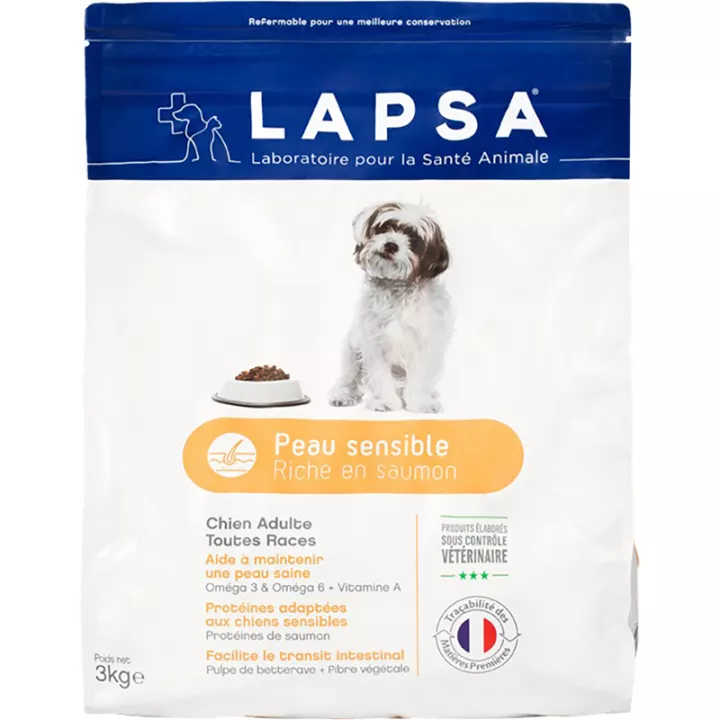
What is Lapsa Adult Dog Maintenance Large Breed Dry Food used for?
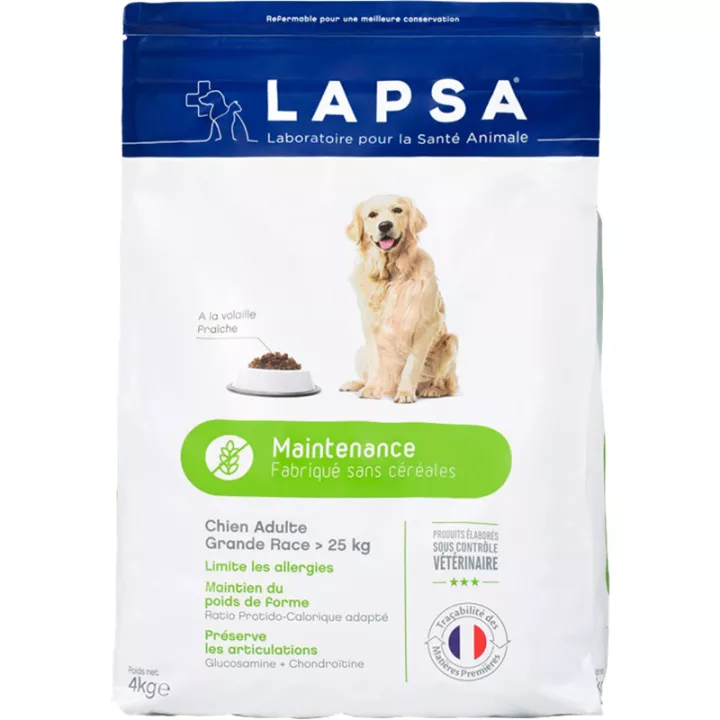
LAPSA Maintenance foods are complete and balanced and contain fresh poultry to meet the needs of your adult dog weighing over 25 kg and aged 2 to 7 years.
Lapsa Adult Dog Maintenance Large Breed Dry Food helps your dog:
- Reduce allergies, as it is grain-free.
- Maintain muscle mass thanks to an appropriate protein-to-calorie ratio.
- Protect his joints thanks to the presence of glucosamine and chondroitin.
Product highlights:
- Supports your dog’s carnivorous instincts: 82% animal protein.
- Highly digestible: Thanks to the high-quality protein.
- Healthy, shiny coat: thanks to the benefits of Omega-3 and Omega-6 fatty acids.
- The kibble’s texture is specially designed to promote good oral hygiene.
- Meat certified as fit for human consumption: both before and after slaughter.
For large-breed dogs, maintaining muscle mass is essential. Lapsa kibble is formulated with an appropriate protein-to-calorie ratio, meaning it provides an adequate amount of protein to support your dog’s muscle development and maintenance. This helps your dog stay strong and in top shape.
Joint problems are common in large-breed dogs. Lapsa kibble contains glucosamine and chondroitin, two essential components for joint health. They help prevent joint problems and maintain your dog’s mobility throughout its life.
Food allergies can cause discomfort and skin problems in dogs. Lapsa’s grain-free kibble reduces the risk of food allergies, providing your dog with a diet tailored to his nutritional needs while supporting healthy skin.
Healthy digestion is essential for your dog’s well-being. Lapsa dry dog food is formulated to promote optimal digestion. It contains high-quality fiber that supports your pet’s digestive health, thereby reducing the risk of gastrointestinal problems.
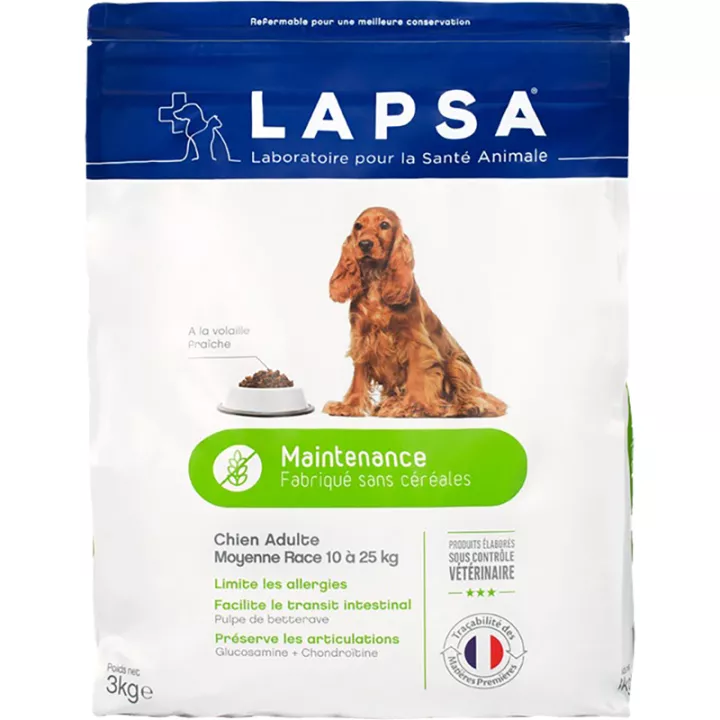
At the Lapsa Veterinary Laboratory, we also offer maintenance kibble for medium-sized dog breeds at the best price in our online pharmacy.
How should you use this kibble for large dogs?
Dog’s weight (kg) 25 30 40 60 80
High activity level (>2 hours) – g per day 440 505 625 850 1050
Normal activity (>1 hour) – g per day 400 460 570 770 955
Low activity (< 1 hour) - g per day 340 390 485 655 815
Share your opinion on the usage guidelines and feeding recommendations for Lapsa Adult Dog Maintenance Large Breed Dry Food with our partner. Reviews are verified after your purchase.
Precautions for Use
- Always leave a bowl of fresh water available for your pet.
- Close the package tightly after opening.
- Best used before the best-by date printed on the package.
- Store in a cool, dry place.
What are the ingredients?
Dehydrated chicken protein (34%), potato starch, fresh poultry (10%), peas, split peas, poultry fat, meat hydrolysate, dehydrated beet pulp, flaxseed, brewer’s yeast, minerals, inulin (0.8%), fish oil, dehydrated carrots, dehydrated apples, mannan-oligosaccharides, dehydrated broccoli, dehydrated spinach, dehydrated cranberries, dehydrated blueberries, chondroitin sulfate (0.01%), glucosamine (0.01%).
Packaging
Lapsa is available in 4-kg bags.
Our advice and expert opinions from pharmacists
Nutrition: How should I feed my large-breed dog?
Large dogs aren’t just distinguished by their size. They also have specific needs, particularly when it comes to nutrition. These needs must be met to ensure their good health.
Large dogs have big appetites and slower metabolisms. They need fewer calories and less fat to stay lean and healthy. Large dogs must develop and maintain a strong, sturdy skeleton and powerful joints.
Do not overfeed your large- or giant-breed dog—partly because of the common health issues that affect all dogs, and partly to avoid putting excess weight on its skeletal structure, which could lead to deformities, especially during its youth.
You may therefore want to choose special large-breed dry food. These formulas are designed to meet the specific needs of large dogs; they are more concentrated, easier to digest, and encourage chewing. It is recommended to feed large dogs two meals a day rather than just one. If the dog tends to eat too quickly, it’s best to divide its meals into smaller portions. Follow the feeding guidelines on the package.
Finally, avoid feeding your dog right before or after exercise. It’s best to wait at least an hour to reduce the risk of stomach torsion.