Thymol CT Thyme: When Should It Be Used When Other Types of Thyme Aren't Enough?
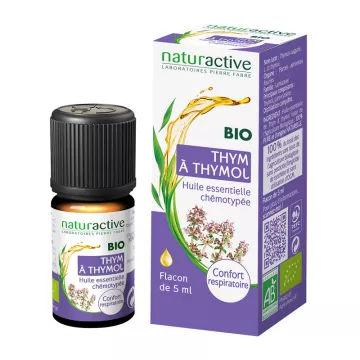
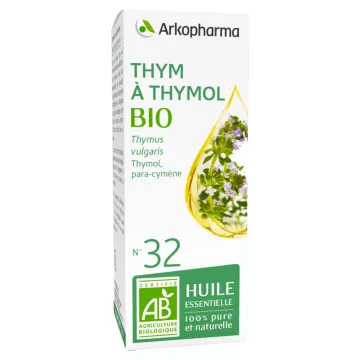
Thymol CT thyme (Thymus vulgaris CT thymol) is the most potent of the four chemotypes of thyme. Its thymol content (40–60%) makes it the most active anti-infective essential oil in the Thymus genus—but also the most dermocaustic and the one requiring the strictest precautions. This is the essential oil to use when an established infection does not respond to milder chemotypes (linalool, thujanol).
For a complete comparison of the four chemotypes, see our thyme page. This page details the specific protocols for thymol chemotype.
What are the thymol CT protocols for established infections?
Its indications: established bacterial and fungal infections in adults—where speed and potency are paramount.
- Intensive winter support: 2–3 drops of a 10–15% solution in vegetable oil on the soles of the feet, morning and evening—adults only, for a maximum of 7–10 days
- Infectious intestinal disorders (traveler’s diarrhea, bacterial gastroenteritis): combination of CT thymol + compact oregano + ravintsara —in enteric-coated capsules only, under the supervision of a healthcare professional—never take directly by mouth
- Acute respiratory infections in adults: Inhale 1–2 drops in a bowl of hot water (5–10 min max) + short diffusion for 10–15 min with eucalyptus or ravintsara—thymol essential oil may irritate the mucous membranes if diffused alone for prolonged periods
- Resistant skin fungal infections: 3–5% in calophyllum oil applied to the affected area — thymol is one of the most well-documented natural topical antifungals
Why is thymol essential oil more potent but less practical than compact oregano?
Both essential oils have similar phenolic profiles—but they are not equivalent.
Compact oregano contains 60–80% carvacrol, which gives it a slightly broader antimicrobial spectrum. Thymol CT is dominated by thymol, which is documented as being more active against bacterial biofilms—useful for persistent infections. Both are dermocaustic, both are for adult use only, and both are used in short courses of 7–10 days. The choice often depends on availability and the individual’s constitution.
What are the absolute precautions for CT Thymol?
- Dermocaustic: always dilute to 5–15% in a vegetable oil—never apply undiluted or to the face
- Pregnant and breastfeeding women: contraindicated
- Children under 12: contraindicated—use linalool essential oil or thujanol essential oil
- Asthma and epilepsy: consult a doctor—phenols can trigger bronchospasm and lower the seizure threshold
- Liver failure: consult a doctor—thymol is metabolized by the liver; accumulation is possible
- Duration: 7–10 days maximum per treatment course; mandatory break
- Internal use: only in enteric-coated capsules and under the prescription of a qualified professional—never taken directly