What are Sigvaris Venoped Summer Venostimulating Insoles used for?
Sigvaris Venoped Summer Insolesare a medical device designed to stimulate venous returnwhile you walk, with the goal of helping to relieve heavy legs. For best results, wear these insoles as soon as you wake up, making sure your skin is clean and dry. Do not use Venoped Summer on broken skin.
If you experience heavy legs, tingling, or a prickling sensation at the end of the day, Sigvaris has developed theseVenoped Summer vein-stimulating insolesto support you throughout your day.
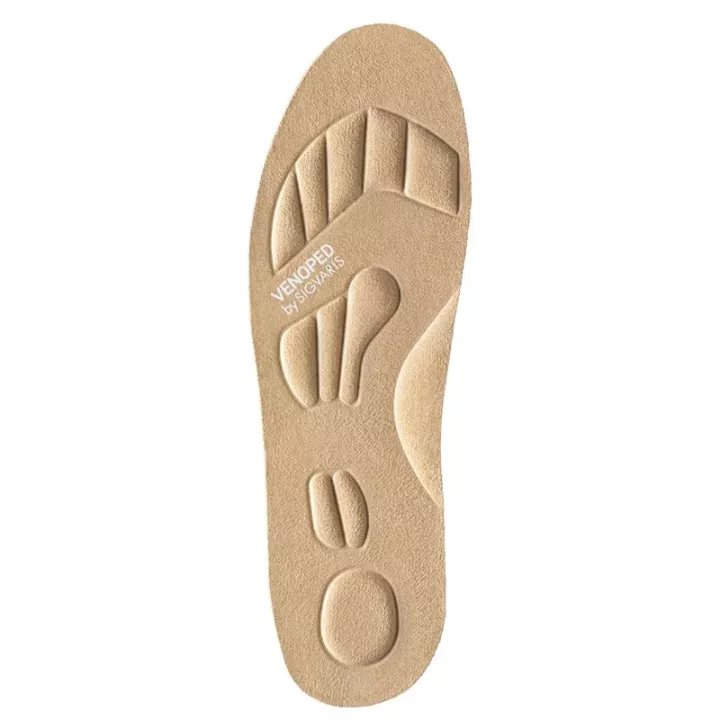
Venoped Summer insoles provide discreet support throughout the day thanks to their shape, which is adapted to the foot’s anatomy. The insoles stimulate venous return and the flow of blood back up through the lower limbs via raised zones that activate the venous pump, thereby reducing the sensation of heavy legs.
Venoped Sigvaris vein-stimulating insolesare very comfortable; they won’t hinder you during your daily activities, whether at work or on vacation. Thanks to their thin design, you can wear theseorthopedic insolesdiscreetlywith your summer shoes. The top layer of the Venoped summer insolesis made of a fabric with absorbent properties. Combined with the antibacterial bottom layer—rich in charcoal and highly absorbent—the negative effects of perspiration are reduced and no longer interfere with your daily life.
Ergonomic Design
Sigvaris Summer Venostimulating Insoles are developed with a focus on ergonomics to provide optimal comfort for the user. Their ingenious design incorporates specific textured areas that apply targeted pressure to key points on the foot, effectively stimulating the venous pump. This stimulation promotes blood return to the lower limbs, thereby significantly reducing the sensation of heavy legs.
The raised zones strategically placed on the insoles were designed with the foot’s anatomy and blood circulation in mind. This ergonomic approach ensures optimal pressure distribution, providing effective support while maintaining comfort. As a result, even during prolonged activity or long periods of walking, Sigvaris Summer Venous Stimulation Insoles provide lasting relief and a feeling of lightness in the legs.
Comfort and Discretion
The slim design of Sigvaris Summer Venostimulating Insoles allows the wearer to wear them discreetly and comfortably, no matter what activity they’re engaged in. Their discreet profile fits perfectly into most summer shoes, allowing them to be worn comfortably at work, on vacation, or during outdoor activities. This versatility makes them an essential accessory for anyone who wants to enjoy optimal comfort throughout the day without compromising their style or mobility.
In addition, the materials used to manufacture the Sigvaris Summer Venous-Stimulating Insoles help enhance their comfort and practicality. The upper layer, made of moisture-wicking fabric, ensures effective moisture absorption, while the antibacterial bottom layer, enriched with charcoal, prevents the formation of unpleasant odors and provides a lasting feeling of freshness. Thus, even in hot weather, users can enjoy a lasting sense of well-being without being bothered by the effects of perspiration.
How to Use Sigvaris Venoped Venostimulating Summer Insoles Correctly?
Slip the insole into your shoe.
Share your feedback on the usage instructions and dosage for Sigvaris Venoped Summer Venostimulating Insoles with our partner Verified Reviews after your purchase.
What are the side effects and contraindications?
For external use only. Follow the instructions for use. Place in the shoe. Store in a clean, dry place away from heat, moisture, and light. Always keep out of reach of children.
What are the ingredients in these Circulation Insoles?
Sigvaris Venoped Summer Venous Stimulation Insoles are formulated with:
- Polyurethane: 92%
- Polyester: 8%
Presentation - Packaging
Sigvaris Venoped Summer Venostimulating Insoles come as a pair of insoles.
Sigvaris Venoped Summer Venous Stimulation Insoles are an effective solution for relieving symptoms of heavy legs during the summer months. Their ergonomic design, combined with their comfort and discretion, makes them an ideal choice for those looking to fully enjoy their daily activities without being bothered by these venous discomforts.