What is Opticlude Silicone Orthoptic Dressing 3M used for?
Opticlude orthoptic bandages are used to treat strabismus and amblyopia in children. Worn over the preferred eye, the bandage forces the weaker eye to work.
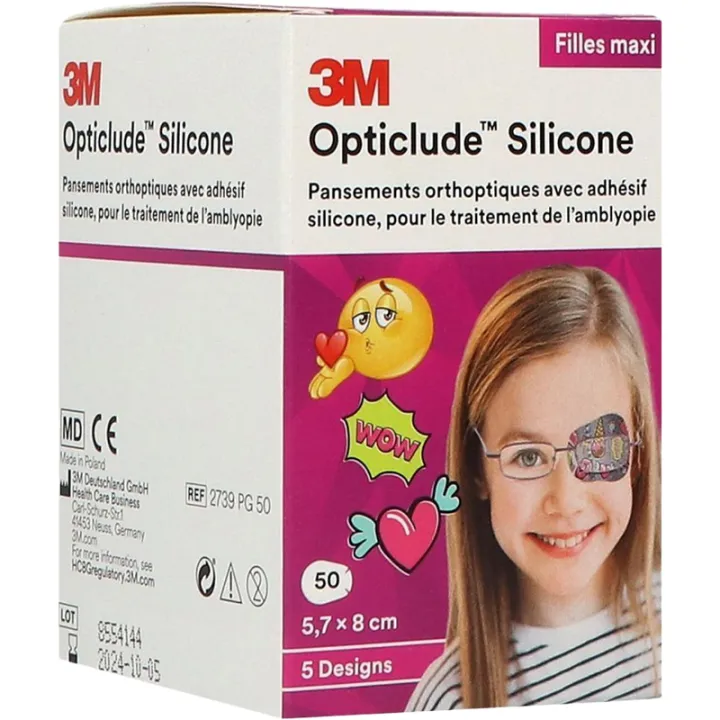
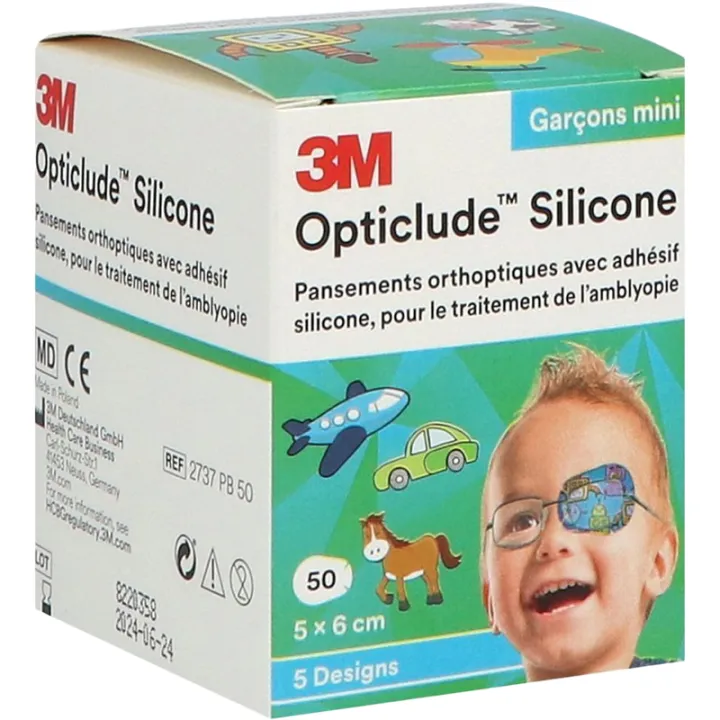
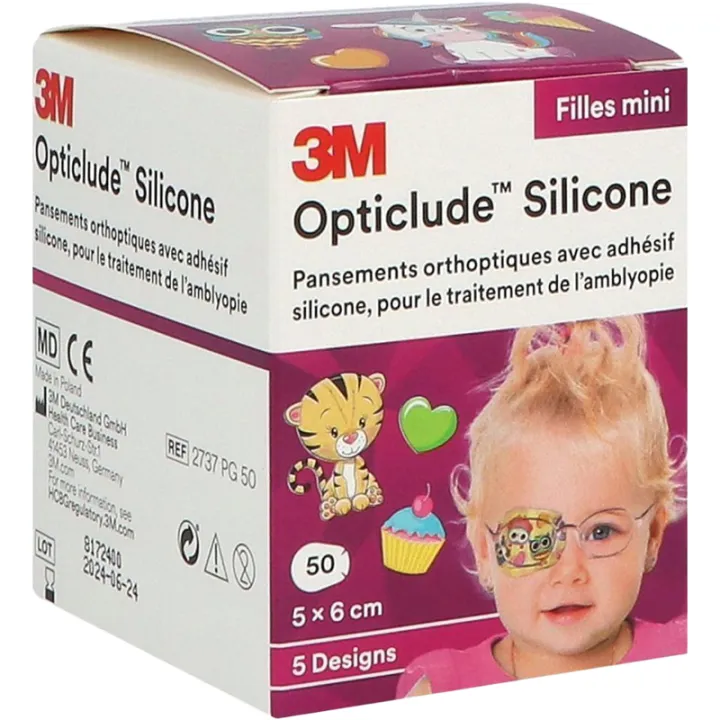
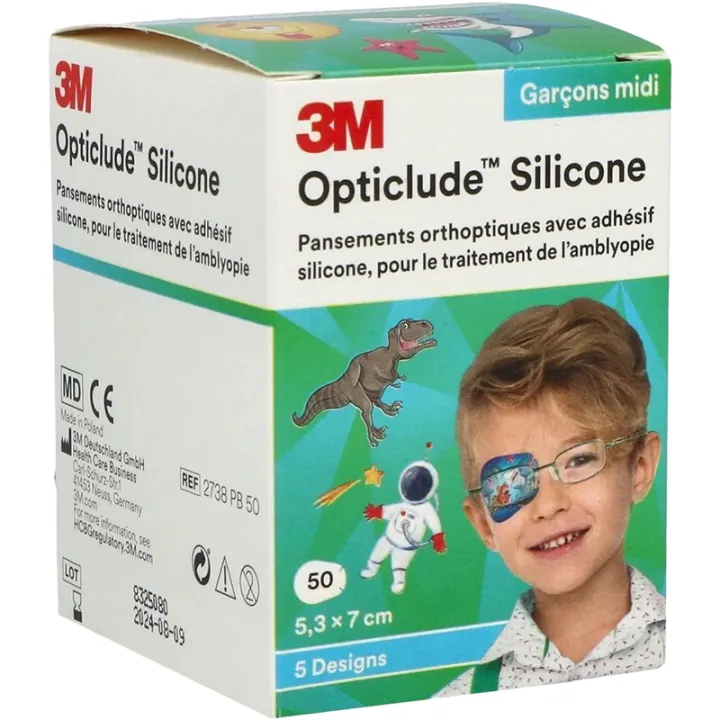
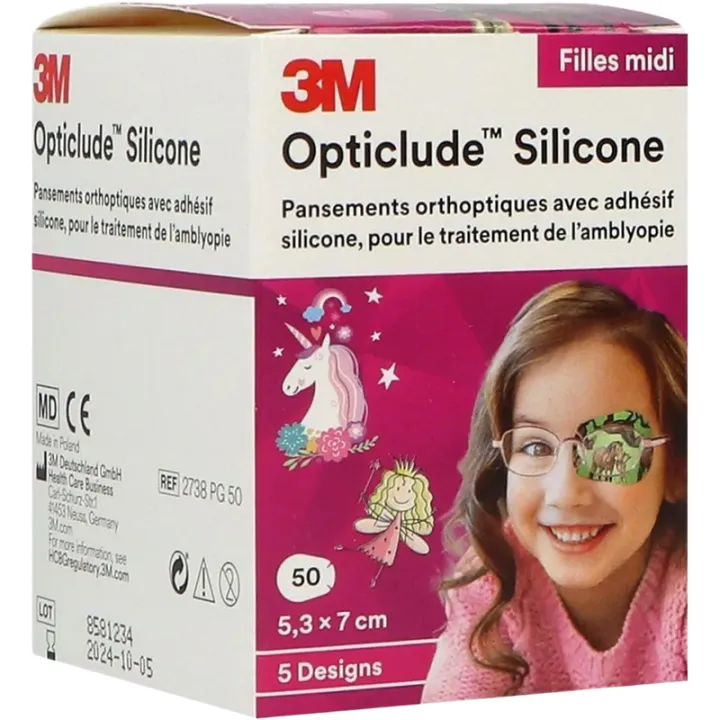
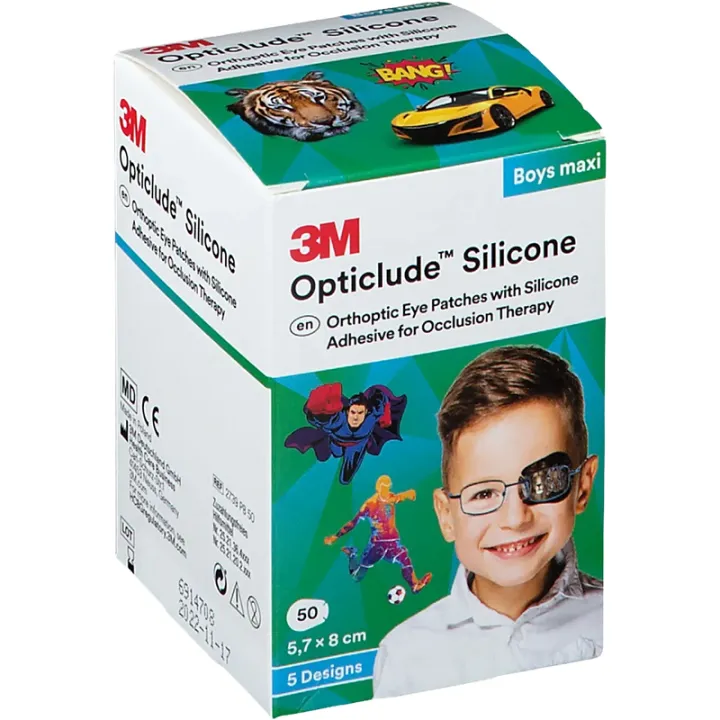
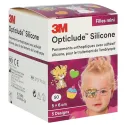
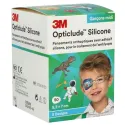
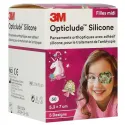
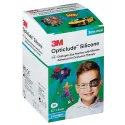
A range of colorful bandages - each box contains a selection of designs. Bandages are notched at the nose bridge for a perfect fit.
- Skin-friendly material for painless removal.
- This dressing features a silicone adhesive that can be repositioned without loss of adhesion.
- The non-adhesive pad prevents the dressing from sticking to the eye when tear secretions are present.
Strabismus and amblyopia, common eye conditions in children, require early intervention to correct vision and promote normal visual development. Opticlude orthoptic bandages play an essential role in this treatment, helping to strengthen the weakened eye by temporarily occluding it. This forced occlusion of the preferred eye encourages the weaker eye to work, thus promoting proper visual alignment.
3M Opticlude orthoptic bandages are available in a range of sizes including mini, midi and maxi, enabling a precise fit for every patient, regardless of age or facial size.
Each box of dressings contains a selection of fun designs, allowing children to choose their dressings according to their preferences. This playful feature not only makes treatment more appealing to young patients, but can also encourage them to wear their dressings regularly, which is essential for successful treatment.
The adhesive layer of 3M Opticlude orthoptic dressings is specially formulated to be gentle on the skin, reducing the risk of skin irritation, even with prolonged use. What's more, the non-adherent pad in the center of the dressing prevents it from sticking to the eye in the event of lacrimal secretions, ensuring optimum comfort for the patient throughout treatment.
We also offer Opticlude Pansements Orthoptique 3M, at the best price in our online pharmacy.
How to use this solution for strabismus?
For best results, clean and dry the skin around the eyes, then remove the protective paper from the bandage. Gently close the eyes, avoiding wrinkling the eyelids so as not to form fine lines. Apply the dressing with the groove facing the nose. Do not stretch the bandage or the skin. Lightly massage the bandage to ensure perfect hold.
To remove, support the skin around the bandage. Starting from the side of the nose, gently lift the edge of the bandage and remove it slowly, moving towards the ear. Fold the dressing over itself.
Change dressing daily.
Consult an ophthalmologist regularly to monitor your condition and advise on the use and necessity of the bandage.
Give your opinion on the Opticlude Écran Orthoptique instructions for use and dosage with our partner Verified opinions after your purchase.
Precautions for use
- It is important to consult a healthcare professional before starting to use Opticlude dressings to ensure they are suitable for your specific condition.
- Do not reuse dressings to avoid the risk of infection.
- Monitor the area for any allergic reaction or irritation, and consult a physician if symptoms occur.
- Change the dressing as recommended by your specialist, usually once a day.
What are the ingredients?
Opticlude Silicone Pansements Orthoptique 3M are silicone-coated, easy to apply and remove, with limited risk of skin damage. Thanks to the unique pressure-sensitive adhesive, the dressing stays securely in place during the occlusion period.
Presentation
Box of 50 mini (5 cm x 6 cm), midi (5.3 cm x 7 cm) or maxi (5.7 cm x 8 cm) size dressings.